
AI in Australian Schools: Why Policy Isn't Training
Australian schools have GenAI policy, but little professional development for teachers. Here's why real AI readiness needs more than a compliance module.
EDUCATIONAI IN EDUCATION
Hayley Laney- Teaching Futures
7/14/20264 min read
What Genuine Professional Readiness Actually Looks Like
As educators, we need to be able to understand the challenges that GENAI use presents as students use the tools, to know the pedagogical value in utilising the tool.
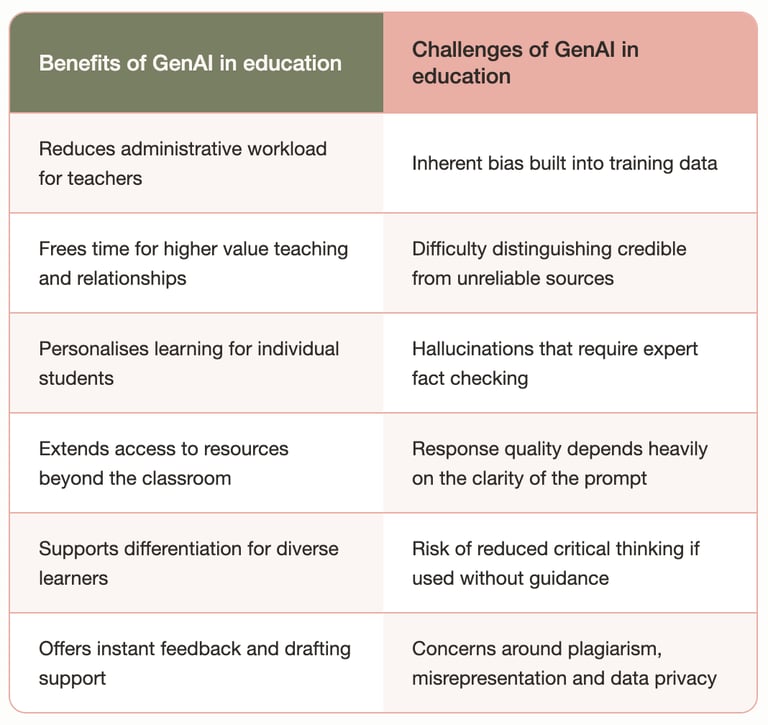
There are 5 main challenges in supporting students to understand the use of AI as a learning partner;
Systems training- the way Generative AI systems are trained encompasses inherent bias. Giving rise to the majority opinion, and often minimising knowledge of minority groups.
Online systems- As most Gen AI rely on online sources as it's "intelligence" there is limited ability to decipher credible and authentic data, leading to misconceptions of statistics and data collection.
AI hallucinations- GenAI had been found to "hallucinate" or make up information that it see fit, often needing checking by someone in the field to ensure accuracy.
Human Input- as GenAI responds to human prompts only, the clarity of responses can differ. This showed throughout the insights of the SA pilot program.
Critical Thinking- students need to be able to critically reflect on responses, so the skill in understanding the response needs to be explicitly taught.
Considering these challenges, teachers are not going to be replaced. The pedagogical value of didactic teaching and the genuine interactions between students and teachers require genuine professional readiness about when and how AI belongs in learning.
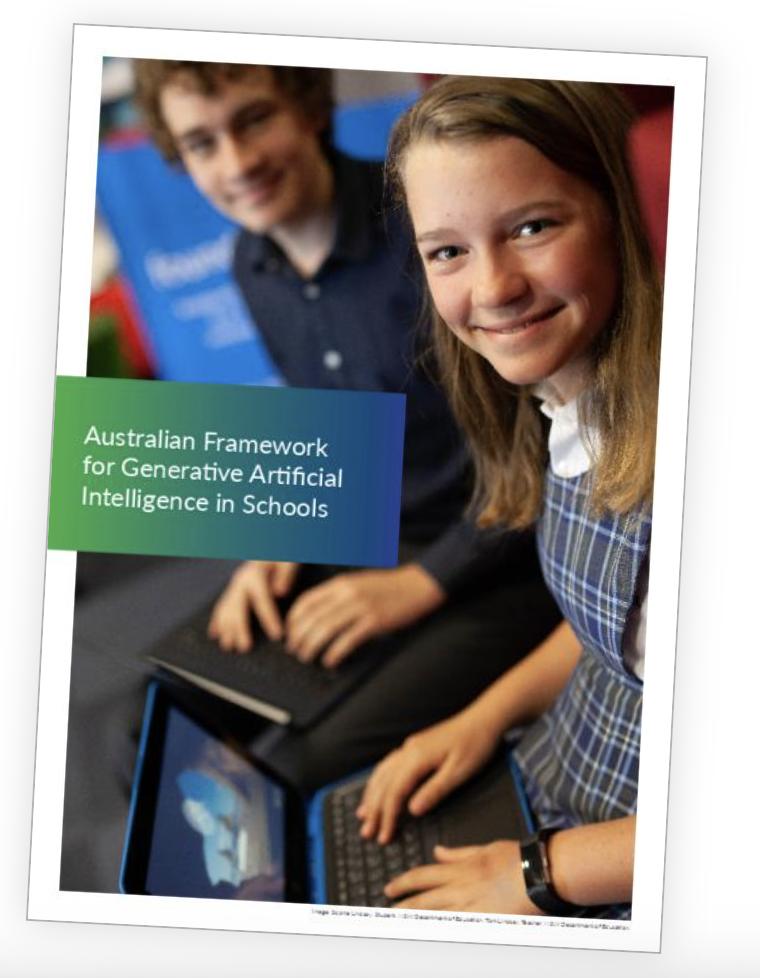
So, what does Genuine professional readiness look like? Well, it needs to beyond the basics, not another training that show me how to use a chatbot, not another online training that outlines the policy, but genuine engagement with how teachers can use this in both their classrooms and for the benefit of their workload. The Australian Framework for Generative AI in Schools calls for AI to support teacher expertise rather than replace it. That is only possible when teachers have had the time, the mentoring, and the structure to build that expertise in the first place, which by its own reporting has deliberately not engaged in.
I've always been an advocate for Tech in Education; its power has never been in what the tool provides, but how it supports the pedagogical choices we make as teachers and deepens understanding and learning. GenAI is no different; it has the power to automate tasks to relieve administrative burden but also personalise learning and engage with resources beyond the classroom walls. Refusing to learn this tool isn't protecting our kids from AI. It's failing to show them how to use it without losing the human connection that teaches them.
This is the work I do. In-person workshops teach staff to use AI properly, as a thinking partner, without losing the human connection that makes teaching what it is. Online PD is coming soon for schools that need it more flexibly. Contact Me direct on hello@teachingfutures.com.au, to discuss your sites training requirements.
References
Australian Government Department of Education. (2025). Australian Framework for Generative AI in Schools. https://www.education.gov.au/schooling/resources/australian-framework-generative-artificial-intelligence-ai-schools
Brandão, A., Pedro, L., & Zagalo, N. (2024). Teacher professional development for a future with generative artificial intelligence: An integrative literature review. Digital Education Review, 45, 151–157. https://doi.org/10.1344/der.2024.45.151-157
Friedman, T., Ainley, J., Schulz, W., & Dix, K. (2025). TALIS 2024 Australian report: The teaching and learning international survey. Australian Council for Educational Research. https://doi.org/10.37517/978-1-74286-801-1
Langford, S. (2026, March 30). How to create a whole-school generative AI policy that complies with state department rules. TeachingJobs.com.au. https://www.teachingjobs.com.au/education-news/whole-school-generative-ai-policy-guide-or-state-compliance-or-teaching-jobs-196
Miao, F., & Cukurova, M. (2024). AI competency framework for teachers. UNESCO. https://unesdoc.unesco.org/ark:/48223/pf0000391104
South Australia Department for Education. (2024). EdChat: Insights report. https://www.education.sa.gov.au/docs/ict/edchat-insights-report.pdf
Williams, T. (2026, May 26). Australian students using AI to complete assessments. Information Age. https://ia.acs.org.au/article/2026/australian-students-using-ai-to-complete-assessments.html
Schools Rolled Out AI and Called the Policy Training
The Policy Is In. The Preparation Isn't.
In every Staff Room I visited recently I have heard the same thing, How can we stop the kids using AI. Half the room nods in agreement, that AI has depleted education as we know it, that other half sit smugly thinking, well it just halved my workload.
Whatever you opinion on AI in Education, we must accept that it is here and in nearly every state and territory of Australia, there is an expectation that teachers not only get on board with AI, but learn how to produce improved learning outcomes from their students with the Use of AI. In 2023, South Australia became the first jurisdiction to pilot GenAI in schools, with their own Chatbot, Edchat, created in collaboration with Microsoft rolled out to both staff and students. In 2025 The National AI in Schools Taskforce created the Australian Framework for Generative AI Framework, accepted by every education minister across all jurisdictions, this embeds the expectation that AI is to enhance education.
While the SA pilot showed good uptake of the EdChat feature, there was a deliberate intention not to provide professional development to staff on how to use the tool and now approximately 80% of teachers are unsure how to use the tool to engage students further in education. (Department for Education, 2025)
While the guidelines of use of AI for staff and students, exists, like most tech innovation, the innovation itself is outpacing the speed at which frameworks and guidelines can be rolled out. The difficulty with Gen AI, is that the risk have a greater potential to lead to poorer outcomes. On the other hand, reluctance to engage in Gen AI as staff will have future impacts on student learning, as this technology is giving rise to the Fourth Industrial Revolution. Teachers are watching two things happen at once, students cheating with AI, and students thinking less because of it. W2ith little support in professional learning of AI and how it can become a partner in education, there is an urgent need for teachers to be trained in not only tool use, but confidence in the ethical use of GenAI.
A Training Deficit, Not a Tool Problem
A survey performed by TALIS suggested that 75% of teachers refrained from using Gen AI because they simply had limited knowledge and understanding of the tool, a clear indication of a training deficit. Yet the permeation of Gen AI tools has been significant since 2022, and of the 80% of teachers that had tried GenAI, there was also significant concern about the use of Gen AI, especially with student use, with concerns ranging from misrepresentation of student work (plagiarism), the amplification of bias and the privacy of data.
For Teachers
Teaching Futures
For Organisations
Expert mentoring and professional development for early career teachers and the organisations that support them.
About
© 2025 Teaching Futures · Hayley Laney · All rights reserved
Teaching Futures acknowledges the Traditional Custodians of the lands on which we learn and work, and pays respect to Elders past, present, and emerging.